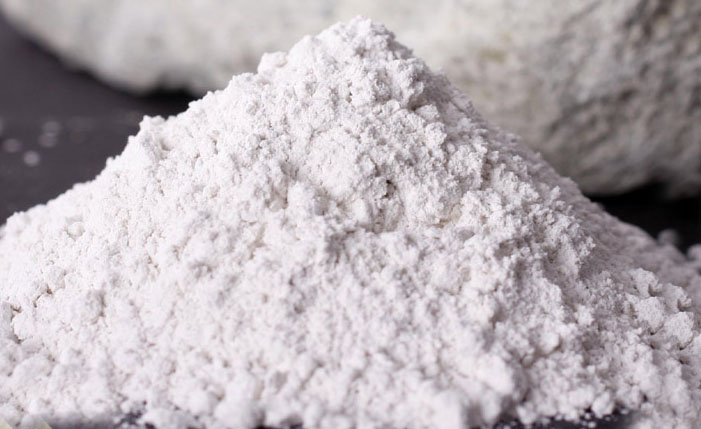
What is organoclay?
Natural montmorillonite minerals are modified to create bentonite clay and its unique properties, giving it unique functionality, such as good hydrophilicity and the ability to change its rheological properties and improve its thixotropic properties.
Organoclay ammonium bentonite development has been a very long time, many users in the process of oil extraction to improve the role of fluids and rocks, which is enhanced by organic bentonite. Also in some cosmetics and personal care products, as well as paints and coatings and greases in the field of organic bentonite have good performance.
Then its biggest advantage is that it has a high degree of hydrophilicity and good adsorption capacity, and can greatly improve the rheological properties. Organic bentonite itself and the compatibility of other chemicals.
Is also one of the reasons why he can be used by many different industrial fields. At present, organic bentonite has been an indispensable raw material in many industrial fields.
Organoclay composition:
Organic cations and bentonite make up organoclay bentonite. It is through the mineral surface of the metal ions and organic cations for ion exchange, so as to get the organic clay bentonite.
The organoclay composition is mainly in the field of application to show that it can improve the rheological properties, as well as its hydrophilicity and other characteristics. Other chemical components of organic bentonite include alkyl quaternary ammonium salts and so on.
Chemical reaction of organic bentonite under different conditions Organic bentonite produced by the chemical reaction and it is located in the humidity, PH value, temperature have a direct impact.
The most direct impact of organic bentonite is its ion exchange reaction and environmental stability and surfactants, etc. will have a direct impact on it. At present, organic bentonite has been widely used in oil-based paint coatings and water-based paint coatings.
In paint coatings, it is used as an additive to improve the adhesion and anti-settling properties of the paint, his flake structure makes it have good stability, while its anti-sagging properties can also be improved, when the organic bentonite used in paint coatings, in a long time of storage, Organoclay ammonium bentonite can prevent the pigments from being divided into the realization of the stability of the composition of the paint coatings.
In personal cosmetics and skin care products, organic bentonite is mainly to achieve the effect of thickening, so it is used as a thickener. This is because it enhances the viscosity of the product and makes the formulation more stable. The most common applications of organic bentonite are in nail polish, skin care products, lubricating creams, lotions, and more.
In drilling mud, mainly in the oil-based system of drilling mud fluid, it is mainly used as a suspending agent and rheology modifier, organoclay tetraallkyl ammonium bentonite can enhance your home’s annual combined, the ability to carry the rock beyond the boundary of the protection of the well wall, but also on the mud of the taro silk amount to be controlled.
In other fields, organoclay tetraallkyl ammonium bentonite also has an important role, such as grease, ink, putty and other fields.
What are organoclays?
Organoclay ammonium bentonite CP-34 is an organo clay (modified montmorillonite), designed especially for use in solvent based system including intermediate and low polarity range organic liquid..
Properties
Composition Organic derivative of a montmorillonite clay
Appearance Fine powder, white
Moisture content (105℃,2hr) ≤3.5%
Particle size % Thru 200 Mesh ≥95%
Advantages | Organoclay ammonium bentonite
- Effectively suspends weighting materials and other solids
- Maintains suspension over a wide temperature range
- Eliminates need for chemical activators
- Is easy to disperse and rapid yielding
Application | Organoclay ammonium bentonite
CP-34 is used in the following applications:
- Oil drilling mud (diesel oil)
- Grease Lubricant (diesel oil)
- Inks
Using
CP-34 disperses under high shear and requires a polar activator (30%~40%) for best efficiency. Heat is not required to obtain good dispersion. Addition levels are typically in 0.2%~2.0%.
Polar activator (95% Ethanol or 95% Methanol) is needed. Normally addition level of polar activator is recommended to be 30%~40% of CP-34 in weight.
Safety
All safety information is provided in the Material Safety Data Sheets for Zhejiang Camp-Shinning New Material Co.,Ltd..
Package
Kraft paper bag with PE liner or multi-wall paper sacks or customized. 25kg/bag or 22.68kg/bag or customized