Rheological modifiers clay can be used in: greases: to optimize lubrication and reduce wear. Also in printing inks: for precise color rendering and improved print quality.
In adhesives and sealants and anti-corrosion coatings as well as in container coatings and asphalt coatings, it optimizes road performance and improves driving safety.
As a member of the conventional organoclay family, its potential is unlocked by mechanical energy, the shear force of highly efficient dispersing equipment, and the right amount of polar activator.
The amount to be added depends entirely on the characteristics of the target organic system and the desired degree of thickening or other specific properties.
Properties
Composition Organic derivative of a montmorillonite clay
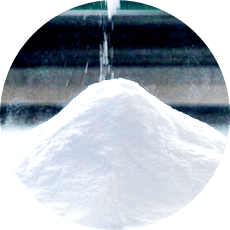
Appearance Fine powder, light yellow
Moisture content (105℃, 2hr) ≤3.5%
Loss on ignition max, %( 1000℃) (26.0±1.5) %
Bulk density 0.40~0.60g/cm3
Fineness (<74μm, %) ≥99%
Dispersion fineness (μm) ≤10
Advantages
- High purity, low silica content.
- Fine dispersion and particle size.
- Good self-activated property.
- Gel is very transparent and of light color
- High
- Cost effective.
Application
CP-21A is used in the following applications:
- Lubricating grease, mainly in grease based on mineral oil.
- Paints including decorative paint, industrial paint.
- Ink.
-
- Sealants and adhesive.
Using
It is a super dispersible grade that can increase flexibility in paint manufacturing. It can be added directly in powder under high shear condition. Addition level is commonly 0.1%~1.0% (7%-10% in greases) of total formulation by weight. Polar activator can be eliminated, but small dosage of polar activator is helpful to achieve better performance.
When non-aliphatic solvent presents, the effectiveness of CP-21A should be evaluated.


 Email: [email protected]