

Organoclay Water Treatment

Organoclay bentonite Specification
The use of organoclay bentonite adsorption, ion exchange and other characteristics of oil extraction out of a large number of oil substances in the water for adsorption treatment is a major advantage of our organic bentonite clay. It can be extracted from the water of petroleum pollutants, some heavy metals and organic solvents in some organic components such as adsorption and filtration.
Brand: Camp Shinning
Application:
- Organophilic Filtration Media
- Bulk Sediment Capping
- Solidification/Stabilization additive
Organoclay Water Treatment | Filtration
organoclay water treatment:Organic bentonite clay through adsorption to remove petroleum-based substances in water, organic solvents and other organic pollutants, but also through ion exchange to remove some heavy metal ions. So generally will be made of organic bentonite to a certain concentration of suspension, organic bentonite suspended into the water, through mixing and stirring, so that it is fully in contact with the water, in order to play its adsorption effect.
Solvent Based Organoclay
Water Based Organoclay
Organoclay for water filtration : That’s why Organoclay Bentonite Clay is your additive of choice for removing impurities and sediments from water, through his adsorption capacity to fulfill your goal of removing impurities.
OrganoBentonite Clay can also be used as a pretreatment for granular activated carbon, where it prevents clogging of the surface pores, which greatly improves efficiency.
Our organoclay water treatment has a superb adsorption capacity and it is effective in mitigating the contamination of sediments in water. Among them, our CP200, with the largest particles and the highest density, helps to settle in the water column.
This granular filter media, by adsorption of organic matter in the oil, mainly using organic bentonite 30% active and anthracite filter media 70%, composed of brown-black mixture, can maximize your adsorption of pollutants.
Compared to the use of activated carbon alone, organoclay water treatment CP200 has stronger economic benefits, because its use can be controlled, and can be used as a separate for the treatment of oil-contaminated water and condensate. It is used in groundwater pumping and sediment dewatering.
Organophilic filtration.
Organoclay Water Treatment


Organoclay filter| organoclay water treatment
Organic bentonite Composition | Organic derivative of a montmorillonite clay |
Organic bentonite Appearance | Fine powder,white |
Organic bentonite Moisture content(105 Degree,2hr) | ≤3.5% |
Organic bentonite Loss on ignition (1000℃) | 28%-31% |
Organic bentonite Bulk density | 0.53g/cm3 |
Organic bentonite Fineness (<74μm, %) | ≥98% |
organoclay water treatment
- Filter media.Adsorbing contamination in oil fields.
- High gelling effectiveness,
- Easy dispersing
- Prevents pigment setting
- Wide application range, it can be applied in all low, middle and high polarity range
- Produce reproducible thixotropic consistency over a wide temperature range
- Imparts particle suspension, preventing hard settling of pigment and fillers
- Exerts strong film reinforcing action in organic binder system
Organoclay water treatment
Organoclay Bentonite disperses under high shear and requires a polar activator for best efficiency. Heat is not required to obtain good dispersion. Addition levels are typically in 0.2%~2.0%. Polar activator (95% Ethanol or 95% Methanol) is needed.
Normally addition level of polar activator is recommended to be 40%~50% of organic Bentonite clay in weight. If in xylene system, addition level of polar activator is about 30%-40% of CP-34 in weight.
Pre-gel is made as below procedure.
- Charge solvent to mill
- Slowly add Bentonite 34(6-10% by weight of total pregel) to mill under agitation.
- Mix at high speed for 5 minutes.
- Add polar activator.
- Mix at high speed for 5 minutes.
Organoclay water treatment
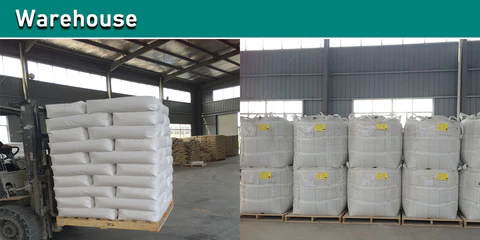
Packing of Organoclay Bentonite:
The package: Kraft bag or kraft complex interior with PE or customized
Packing size: 25kg/bag,50lb/bag, 600kg/bag or customized.
15MT/20FCL with pallet, 18MT/20FCL without pallet, 25.2MT/40FCL with pallet.
The delivery date is 7 to 10 days after receiving the deposit.
Our Organic bentonite is used in:
- Marine paint | Organoclay for Paints,
- Industrial paint,
- heavy-duty,
- anticorrosion paint such as bituminous coatings, epoxy paints, chlorinated rubber paints
- Grease
- Inks
- organoclay water treatment
- Sealant
- Oil Drilling Mud



Company Profile
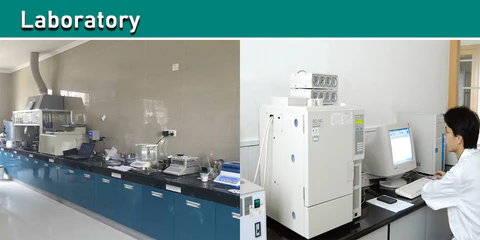
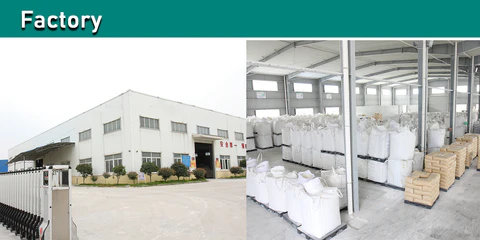
Zhejiang Camp-Shinning New Material Co., Ltd. is a professional manufacturer and supplier of organoclay for paints,bentonite rheology additives with advanced production lines and high-precision testing instruments. At present, Camp-Shinning has passed ISO9001 certification. Its annual output reaches 20,000 tons; it occupies a quarter of the global supply market.
After more than 20 years of accumulation, Camp Shinning’s products have been exported to Europe, America, the Middle East, Southeast Asia and other regions.
As a leading manufacturer and exporter of Organophilic Clay Rheology Auxiliaries, we are ready to welcome you to visit our factory and welcome inquiries.


Tel (Whatsapp): 0086-13185071071
Email: [email protected]
FAQ
1, How do you ensure product quality?
ISO9001 Certification: As an ISO9001-certified company, Camp-Shinning adheres to strict international standards throughout all operations.
Consistency Guarantee: Lab test samples provided to clients are sourced directly from mass production batches, ensuring product uniformity between samples and final shipments.
Pre-Shipment Verification: Customers may request pre-shipment samples for quality confirmation.
2,Why choose Camp-Shinning over competitors?
Zhejiang Camp-Shinning New Material Co., Ltd. offers unique advantages:
Vertical Integration: Ownership of raw material mines in Northern China guarantees stable performance and supply chain control for our organoclay products.
Two Decades of Expertise: 20+ years specializing in modified bentonite manufacturing and global distribution.
Rapid Turnaround: Industry-leading 7–10 day delivery timeline.
3,What are the applications of Modified Bentonite?
Common uses include:
Oil drilling fluids/mud,Organoclay for paints, coatings, inks, lubricating grease, and wastewater treatment.
4,Which markets do you serve?
We export to over 15 countries, including:
Europe: Germany, France, Austria, Spain
Americas: USA, Canada
Middle East/Asia: UAE, Pakistan, Russia, Turkey, India, Philippines, Thailand, Vietnam, Indonesia
5,What are your payment and shipping terms?
Shipping Options: FOB, CFR, CIF, EXW
Payment Methods: T/T (telegraphic transfer), L/C (letter of credit), D/P (documents against payment)
Frequently Asked Questions (FAQ) About Organoclay Bentonite for Water Filtration
- What is organoclay water treatment, and how is it made?
Organic bentonite is a modified form of natural bentonite clay, created by replacing inorganic cations (like sodium or calcium) with organic cations such as quaternary ammonium salts. This process enhances its ability to attract and trap organic pollutants while retaining some natural hydrophilic properties, making it ideal for water filtration. - How does organic bentonite work in water filtration?
Organic bentonite uses adsorption, ion exchange, and flocculationto remove contaminants:
Adsorption: Its organic-rich layers attract pollutants like oils, pesticides, and dyes.
Ion exchange: Heavy metals (lead, mercury, cadmium) are swapped and trapped in its structure.
Flocculation: Suspended particles clump together for easy removal.
3,What are the key benefits of using organic bentonite?
High efficiency: Removes up to 99% of organic pollutants, oils, and heavy metals.
Cost-effective: Reusable after regeneration (via heat or chemical treatment) and requires less frequent replacement.
Versatile: Performs well across varying pH levels and temperatures.
Eco-friendly: Reduces sludge waste and minimizes secondary pollution.
4,Is organic bentonite safe for water treatment?
Yes! Organic bentonite is chemically stable, non-toxic, and compliant with U.S. environmental standards. It’s widely used in industrial and municipal applications, including sensitive processes like oilfield wastewater treatment.
5,How is organic bentonite used in oilfield wastewater treatment?
It tackles oil, heavy metals, and suspended solids by:
Adsorbing oil residues and trapping metal ions.
Flocculating particles for easy separation.
Reducing costs versus traditional methods—no high-pressure equipment or complex setups needed.
6,How much organic bentonite should I use?
Dosage depends on water quality and contamination levels. For best results
Pre-treat water to remove large debris.
Optimize mixing (stirring/aeration ensures even distribution).
Consult experts for tailored dosing—avoid under/overuse to save time and money.
7,Can organic bentonite be reused?
Absolutely! Regenerate spent bentonite via:
Heating to release trapped pollutants.
Chemical rinses to restore adsorption capacity.
This cuts long-term costs and supports sustainable operations.
8,Does organoclay water treatment require special handling?
For peak performance:
Pre-filter water to prevent pore clogging.
Pair with post-treatment (e.g., disinfection) for drinking water compliance.
Store properly in a dry, cool environment.
9,Why choose organic bentonite over traditional filters?
Faster results: Works at room temperature/pressure.
Dual action: Targets organics and heavy metals.
Lower waste: Regeneration extends product life.
10,Where can I buy organic bentonite for my water treatment needs?
We supply premium organic bentonite tailored for industrial, agricultural, and municipal use. Contact us todayfor samples, technical support, and bulk pricing—let’s purify water, smarter!
We sincerely welcome you to consult our organophilic clay, whether it is applied to your paint, ink, grease or oil field drilling fluid.
Order Online
Please send your message to us
*We will reply your inquiry to this Email as soon as we see it