How to Test Organoclay Suspension in paints & Coatings?
Organoclay Suspension Test Method for Coatings | Anti-Settling Performance Evaluation (CP-10).
What is Suspension Performance in Coatings?
In coating and paint systems, suspension performance refers to the ability of a formulation to prevent pigment and filler settling during storage.
A high-performance organoclay forms a stable three-dimensional gel structure, which helps:(How to Test Organoclay Suspension)
- Keep pigments uniformly dispersed
- Prevent hard sediment formation
- Maintain consistent viscosity over time
For formulators, suspension performance is a key factor affecting storage stability and application consistency.
Scope of This Suspension Test Method (How to Test Organoclay Suspension)
This test method is specifically developed for evaluating the anti-settling performance of Organoclay CP-10 in coating systems.
It is applicable to:
- Solvent-based coatings
- Industrial paints
- Pigment dispersion systems
👉 This method introduces 12-hour suspension volume measurement (ml/12h) as a practical indicator of stability.
👉 Traditional viscosity tests (such as xylene viscosity) are not sufficient alone to evaluate long-term suspension behavior in coatings.
Technical Specification for Coating Application
| Item |
Specification |
| Suspension Performance (ml/12h) |
43 – 48 ml |
| Appearance |
Light yellow fine powder |
Reference:
Standard sample suspension value: 48 ml/12h
Suspension Test Method for Coatings (CP-10) (How to Test Organoclay Suspension)
Equipment
- 100 ml graduated cylinder (accuracy 0.01 ml)
- High-speed disperser
- Electronic balance (accuracy 0.001 g)
Materials
- Solvent (e.g., WS-3040 or equivalent coating solvent)
- 95% Methanol (activator)
- Standard Organoclay CP-10 sample
Step 1: Preparation of Organoclay Gel
- Add 98 g solvent into a container
- Slowly add 1% organoclay under 1000 rpm, disperse for 2 minutes
- Add 1% methanol activator
- Increase speed to 1500 rpm, mix for 10 minutes
👉 After dispersion, cool to 20–25°C
Step 2: Static Suspension Test
- Transfer the dispersion into a 100 ml cylinder to 50 ml mark
- Seal and keep on a stable surface without vibration
- Record suspension volume after 4, 6, and 12 hours
👉 The 12-hour suspension volume (ml) is used as the final result
Acceptance Criteria
- Acceptable range: 43–48 ml/12h
- Compare with standard sample to ensure consistency
Appearance Evaluation
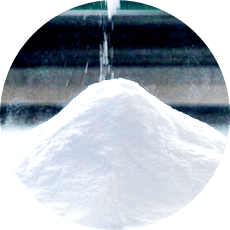
- Place sample and standard sample powders on white paper
- Flatten evenly
- Observe under natural light
👉 Color should be consistent between batches
Why Suspension Performance Matters in Coatings
In real coating applications, poor suspension leads to:
- Pigment settling during storage
- Hard sediment difficult to redisperse
- Color inconsistency
- Reduced shelf life
Using high-quality organoclay like CP-10 helps achieve:
✔ Excellent anti-settling performance
✔ Stable viscosity over time
✔ Improved storage stability
✔ Better application consistency
Suspension vs Viscosity: What’s the Difference?
Many formulations rely only on viscosity testing, but:
- Viscosity = flow resistance under shear
- Suspension = stability under static conditions
👉 A coating can have high viscosity but still suffer from pigment settling.
That’s why suspension testing provides a more realistic evaluation of long-term stability.
Quality Control & Production Requirements (How to Test Organoclay Suspension?)
- All batches must meet 43–48 ml/12h suspension range
- Products outside this range are not released
If there are changes in:
- Raw materials
- Production process
👉 Customer validation is required before shipment
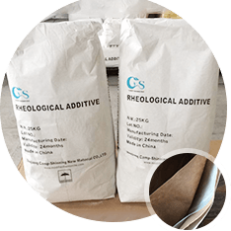
CP-10 is a kind of organo clay rheological additive. It is used in systems of non-polar to medium polarity aliphatic and other solvents (ketones, ester, ether esters, alcohols, aromatic).
Properties
Composition Organic derivative of a montmorillonite clay
Appearance Fine powder,white
Moisture content (105℃,2hr) ≤3.5%
Loss on ignition (1000℃) 30%-34%
Bulk density 0.35~0.45g/cm3
Fineness (<74μm, %) ≥98%
Dispersion fineness (μm) ≤40
Advantages
- High efficiency
- The gel is of light colour and high clarity
- Easy to use, no need to pregel
- Eliminate polar activator
- Consistent development of rheology
- Can be used to post correct
Application
CP-10 is used in the following applications:
- Paints
- Putty
- Sealants &adhesives
- Inks
- Cosmetic
- Nano-composite
Need Organoclay for Coatings?How to Test Organoclay Suspension?
We supply high-performance organoclay for coatings and paints, designed for excellent suspension and anti-settling behavior.
👉 Contact us for samples, formulation support, or technical data.
Email: [email protected]
Whatsapp: 0086-13185071071
How to Test Organoclay Suspension?we hope our info could helpful with you.




 Email: [email protected]