

Organoclay for solvent based waterproofing
Organoclay CP-34, CP-RL and CP-26 are recommended rheology modifiers for petroleum-solvent-based waterproofing formulations. These grades help improve viscosity, thixotropic control, pigment suspension and resistance to settling during storage and application.
All three grades have received positive feedback in practical customer applications.
However, their performance can vary depending on solvent polarity, resin compatibility, pigment loading, processing conditions and the required rheological profile.
We therefore recommend testing CP-34, CP-RL and CP-26 under the same formulation conditions before selecting the most technically suitable and cost-effective grade.
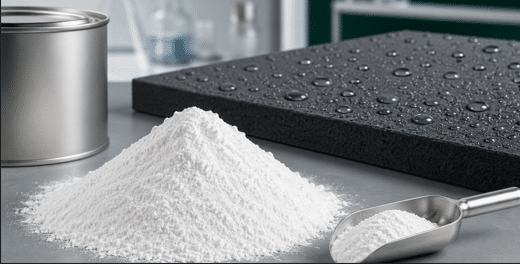
Recommended Grades | organoclay for solvent based waterproofing
| Grade | Recommended application | Selection considerations |
|---|---|---|
| CP-34 | Petroleum-solvent-based waterproof coatings requiring reliable thickening and suspension | Evaluate solvent polarity, resin compatibility, viscosity and storage stability |
| CP-RL | Waterproof formulations requiring balanced rheology and processing performance | Compare dispersion efficiency, anti-settling performance and final application properties |
| CP-26 | Solvent-based waterproof coatings requiring an alternative rheological profile | Test against the other two grades under identical formulation conditions |
CP-34, CP-RL and CP-26 are recommended organoclay rheology modifiers for petroleum-solvent-based waterproofing formulations. Final grade selection should be based on solvent polarity, resin compatibility, pigment loading, target viscosity, anti-settling requirements and total formulation cost.
General Processing Considerations
organoclay for solvent based waterproofing
For petroleum-solvent-based waterproofing systems, the organoclay should first be dispersed thoroughly in the petroleum solvent under high shear. A suitable polar activator may then be introduced to promote organoclay activation and rheological development.
Methanol, ethanol or propylene carbonate may be evaluated as polar activators, depending on the formulation, regulatory requirements and workplace safety controls. Ethanol can be considered when methanol is unsuitable, but it should not automatically be treated as a direct one-to-one replacement. The activator type and dosage should be confirmed through laboratory testing.
Pigments and resin can be incorporated after the organoclay has been properly dispersed and activated. The mixture may then be processed using high-speed dispersion or suitable grinding equipment. A tip speed of approximately 8–12 metres per second may be used as an initial laboratory reference, subject to equipment design and formulation requirements.
If a solid resin is used, it should be converted into a suitable processable form according to the resin supplier’s instructions before incorporation. Final processing conditions must be determined through controlled formulation trials.
Important Safety Note
Methanol and petroleum solvents are hazardous and flammable materials. Formulation work should only be performed by trained professionals using suitable industrial equipment, ventilation, personal protective equipment and the applicable SDS and local safety regulations.
FAQ
Which organoclay is suitable for solvent-based waterproofing?
organoclay for solvent based waterproofing CP-34, CP-RL and CP-26 are our primary recommendations for petroleum-solvent-based waterproofing formulations.
These grades have been accepted in practical customer applications and can provide thickening, thixotropic control and anti-settling performance. Because formulations differ, all three grades should be tested before final selection.
How is organoclay activated in petroleum solvent systems?
The organoclay is normally dispersed in the petroleum solvent under high shear before a suitable polar activator is introduced.
Methanol, ethanol and propylene carbonate may be evaluated as activators. The appropriate activator and dosage depend on solvent polarity, resin chemistry and the required rheological performance.
Can ethanol replace methanol as a polar activator?
Ethanol may be considered when methanol is restricted or unsuitable. However, it should not be assumed to provide identical activation at the same dosage. Comparative laboratory testing is required to determine the appropriate activator type and addition level.
What dispersion speed is recommended?
A tip speed of approximately 8–12 metres per second may be used as an initial reference for laboratory evaluation. Actual settings should be adjusted according to batch size, equipment geometry, viscosity development and dispersion results.
When should pigment and resin be added?
Pigments and resin are generally added after the organoclay has been thoroughly dispersed and activated in the petroleum-solvent phase. Grinding or high-speed dispersion can then be used to complete incorporation and make final rheology adjustments.
Which grade should be selected:
Organoclay for solvent based waterproofing CP-34, CP-RL or CP-26?
We recommend testing CP-34, CP-RL and CP-26(organoclay for solvent based waterproofing) under identical formulation and processing conditions.
The final choice should be based on viscosity development, anti-settling performance, storage stability, application properties, resin compatibility and overall cost-effectiveness.
Order Online
Please send your message to us
*We will reply your inquiry to this Email as soon as we see it