

Organophilic Solvent-Compatible Clay for Solvent Based Aluminum Flake Paints
Organophilic solvent-compatible clay,aluminum flake is heavy and flat. In solvent-based paint, it settles fast. Leave a drum in the warehouse for a couple of months, you get hard cake at the bottom that even a pneumatic mixer struggles to re-disperse. Then you spray it on a vertical panel—sagging streaks, poor flake orientation, patchy metallic finish. General-purpose thickeners either don’t hold the flakes at rest or don’t thin out enough under shear. You can’t spray what feels like peanut butter.
What you need is reversible thixotropy: thick when still, thin when moving. That’s exactly what organophilic clay does.
Organophilic solvent-compatible clay could solve all your problems.
FAQ 1: I’ve tried fumed silica and polyamide wax in my aluminum solvent paint. They still settle or sag. Why would organophilic clay work better?
A: Those additives work in some systems, but not well with heavy aluminum flake. Fumed silica gives shear-thinning but lacks low-shear holding power for high-density pigments. Polyamide wax can cause seediness and needs careful activation temperature. Organophilic clay builds a true thixotropic gel network. It holds the flakes at rest – no hard settling after months. Under shear, it thins instantly for spraying. Plus, it guides flake orientation for better metallic brightness. That’s why formulators switch when they see settling or sagging.Organophilic solvent-compatible clay.
FAQ 2: Do I really need a polar activator like ethanol or propylene carbonate? Can I skip it?
A: No, don’t skip it. Without a polar activator, the clay platelets won’t fully separate and the gel network won’t form. You’ll get poor anti-settling and inconsistent rheology – basically wasted additive. Add a small amount (typically 2–5% on Organophilic solvent-compatible clay weight) after pre-dispersion, then high-shear mix. That’s the only way to unlock the thixotropic structure. It’s not optional.
Organophilic Solvent-Compatible Clay | Rheological additive | Anti-settling agent
What is it | Organophilic solvent-compatible clay
Natural bentonite, organically modified. Turns water-loving clay into solvent-loving. Disperses cleanly in non-aqueous resin systems. Unmodified bentonite? Clumps and fails.
Unlike polyurethane or cellulose thickeners, organophilic clay builds a gel structure through particle stacking and solvent intercalation. Low shear strength holds heavy aluminum flakes. High shear breaks it down instantly. Ordinary additives can’t do that.
What you actually get in your aluminum paint
Anti-settling – Soft thixotropic network at rest. No hard packing after six months in storage.
Sag resistance – Enough low-shear viscosity to stop runs on vertical surfaces. Clean, uniform film.
Real thixotropy – Thick at rest, thin under mixing and spraying. No pump or spray issues.
Flake orientation – Flat aluminum particles lie parallel to the substrate. Brighter metallic finish, consistent reflection.
Shelf life – Less separation, less viscosity drift. Less waste and rework.
Solvent compatibility – Aromatics, aliphatics, ketones. Works fine.
What it’s for
Automotive solvent metallic basecoats and refinish
Industrial aluminum silver paints (machinery, metal parts)
Anti-corrosion metallic solvent paints for steel structures
Decorative solvent metallic coatings for furniture, trim, architectural profiles
Heavy-duty industrial solvent paints with high aluminum loading
How to use it (follow this sequence, don’t skip steps)
Pre-disperse – Take a portion of your solvent, add organophilic clay, mix at moderate speed to wet it out.
Add polar activator – Small amount of ethanol or propylene carbonate. This unlocks the thixotropic structure. Without this step, you get no anti-settling.
High-shear dispersion – Run high-speed mixing for 10–20 minutes. Break down agglomerates. Build uniform gel network.
Add aluminum flake and resin last – After the clay is activated and dispersed. Prevents shear damage to flakes.
Adjust dosage – 0.8% to 2.0% of total paint weight. More aluminum or longer shelf life = higher dosage.
Supply to Australia – plain facts
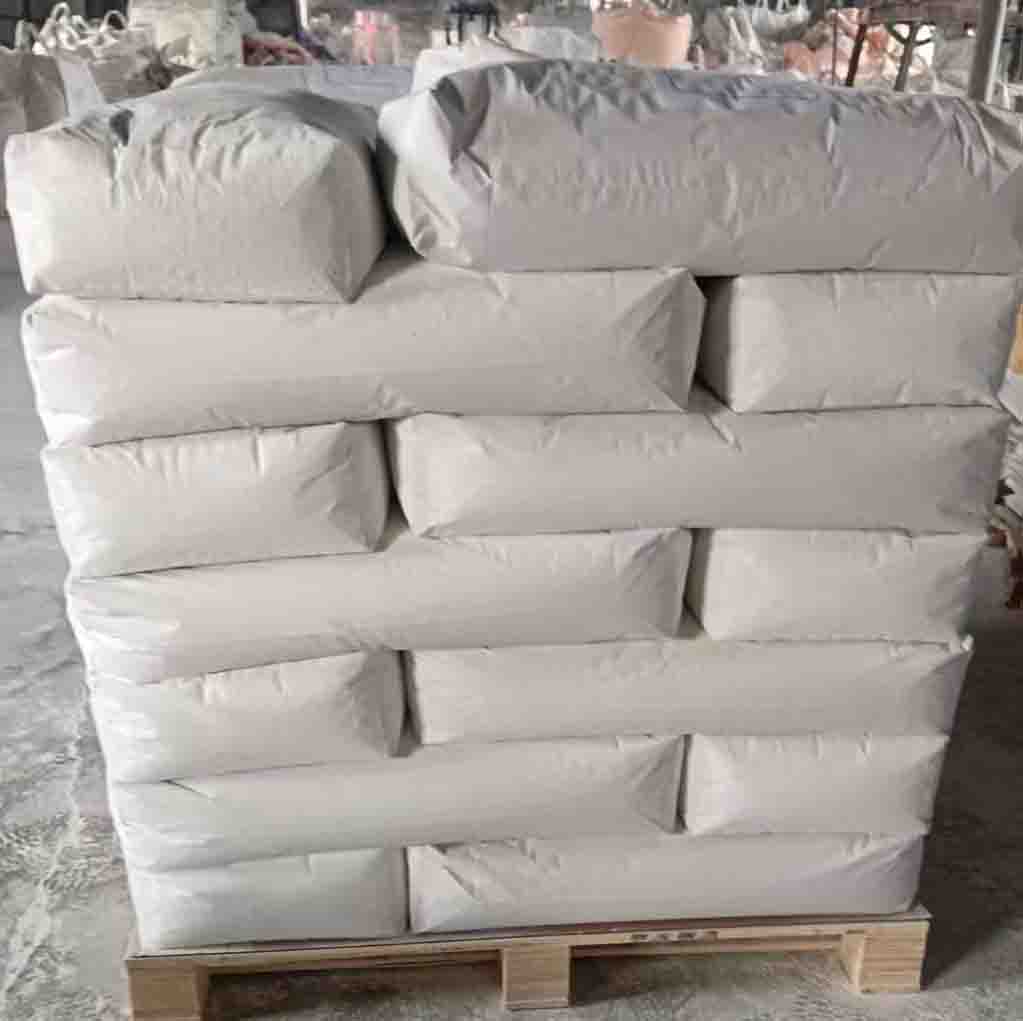
We ship direct to Australia. Packaging: 25 kg kraft paper bags or palletized bulk. FCL and LCL sea freight to major ports (Sydney, Melbourne, Brisbane). Customs clearance is straightforward.
Export packaging is moisture-proof, dust-proof. No degradation after weeks on the ocean.
Technical support available locally – dosage recommendations, dispersion parameters, formulation adjustments for Australian solvent systems and production lines.
Batch consistency is tight. Particle size, solvent compatibility, anti-settling – every batch checked.
Whether you make small-batch decorative metallics or high-volume industrial aluminum coatings, this organophilic clay delivers reliable rheology, storage stability, and spray finish. No surprises.
Organophilic solvent-compatible clay supplier in China.
Order Online
Please send your message to us
*We will reply your inquiry to this Email as soon as we see it