
Inorganic Rheological Additive for Water-Based Coatings
Inorganic Rheological Additives CP-EWS is a high-performance inorganic rheological additive, specifically a modified bentonite designed for water-borne systems. This organobentonite offers superior thixotropy, excellent dispersion, and transparent gel formation even at low dosages. Easy to disperse and highly effective at preventing pigment settling, CP-EWS ensures stable viscosity and anti-sag properties for industrial water-reducible paints, emulsions, coatings, adhesives, and personal care formulations. With a fine white powder composition, high gelling efficiency, and robust compatibility, CP-EWS is the ideal choice for formulators seeking reliable performance and consistent results.”
Water-Borne Formulation Optimization with Inorganic Rheology Agents
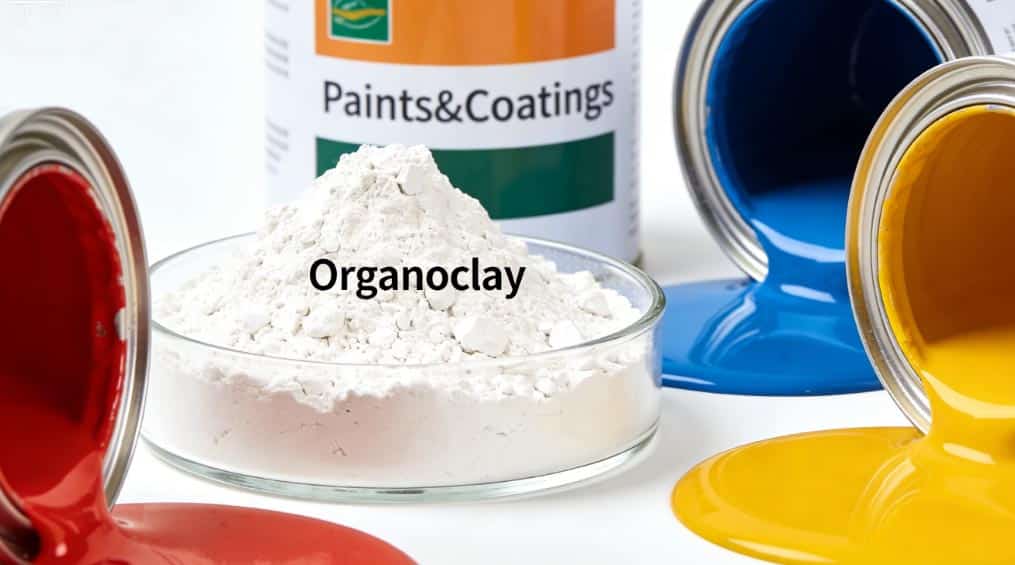
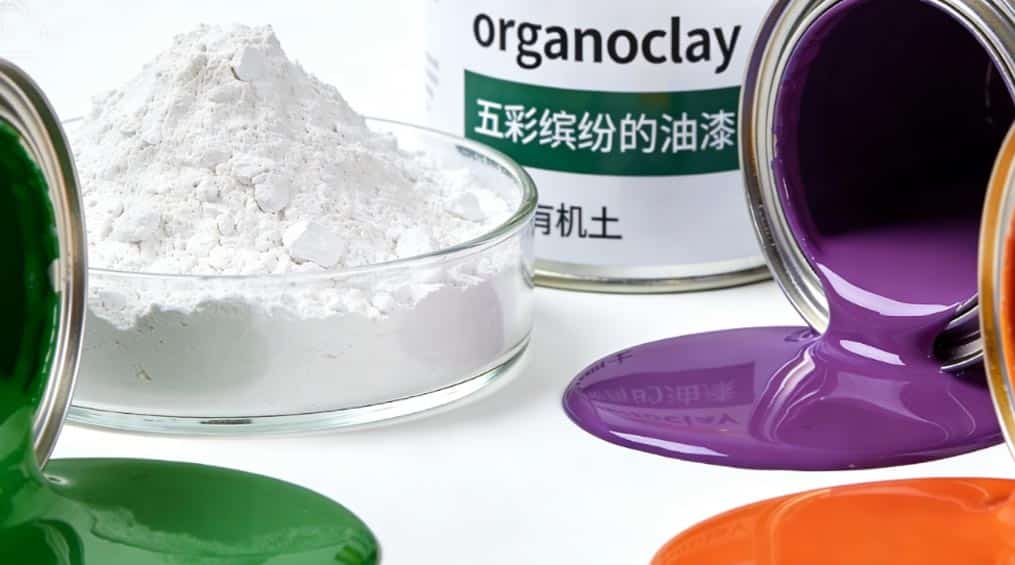
High-Performance Inorganic Rheology Modifiers for Water-Borne Systems


Inorganic Rheological Additives: FAQ for Industrial Applications
Q1: What is an inorganic rheological additive?
A: An inorganic rheological additive is a modified bentonite used as a rheology modifier in water-borne systems. It improves viscosity, thixotropy, and stability in industrial formulations such as paints, coatings, and greases. Common types include organobentonite, organophilic clay, and other rheology agents.
Q2: How does an inorganic rheology modifier work?
A: Inorganic rheological additives interact with water or liquid systems to form a gel network, enhancing suspension, anti-settling, and thixotropic properties. This ensures stable performance and smooth application in water-borne systems.
Q3: Inorganic vs organic rheology additive – what’s the difference?
A: Organic additives (like organoclay) are soap or polymer-based, while inorganic additives are mineral-based (modified bentonite). Inorganic modifiers provide high gelling efficiency, transparency, and strong dispersion in water-borne formulations.
Q4: What are the benefits of using inorganic rheology additives?
A: Inorganic Rheological Additive | Key benefits include:
- High gelling effectiveness even at 2% addition in water
- Easy dispersion and transparent light-colored gel
- Prevents pigment settling
- High thixotropy and good anti-sag properties
- Stable viscosity and improved performance in industrial water-borne systems
Q5: What is the recommended dosage of inorganic rheology modifier?
A: For CP-EWS, the recommended addition is 0.2–3.0% in water-borne systems, depending on formulation and desired rheological performance.
Q6: How to disperse inorganic rheological additives?
A: CP-EWS can be added directly as powder. Procedure:
- Water (pH 7.0–8.0)
- Add CP-EWS and disperse at high speed for 20–30 minutes
- Add additives
- Add pigment and filler, mix thoroughly
- Add emulsion, continue mixing
- Correct post-processing
This ensures proper activation and uniform dispersion of the rheology agent.
Q7: Which systems are compatible with inorganic rheology additives?
A: CP-EWS is compatible with:
- Industrial water-reducible paints
- Emulsion paints
- Toothpaste and tooth polish
- Creams and lotions
- Pigment slurries and blung water
- Water-borne sealants and adhesives
- Ceramics
- Antiseptic formulations
Q8: Can inorganic rheology additives replace organic thickeners?
A: Yes. In water-borne systems, CP-EWS can replace organic thickeners, providing better thixotropy, transparency, and anti-settling performance.
Q9: How to improve dispersion and performance?
A: Ensure correct pH, high-speed dispersion, and follow proper addition sequence. Using high-quality organophilic clay like CP-EWS guarantees uniform gel formation and stable viscosity.
Q10: Which inorganic rheology additive is best for grease?
A: While CP-EWS is optimized for water-borne systems, similar organobentonite or rheology modifiers are selected for grease to achieve suspension, anti-settling, and high thixotropy.
Q11: Best inorganic rheology additive for coatings?
A: CP-EWS delivers high gelling effectiveness, transparency, easy dispersion, and prevents pigment settling in water-borne coatings.
Q12: Can inorganic rheology additives handle high temperatures?
A: In water-borne systems, CP-EWS maintains stability and thixotropic properties under typical processing and storage conditions.
Q13: How do inorganic additives improve anti-settling and thixotropy?
A: CP-EWS forms a transparent gel network, suspending pigments and fillers, enhancing anti-sag and thixotropic performance in water-borne formulations.
Q14: Can they control suspension and viscosity in different systems?
A: Yes. Adjusting the addition of CP-EWS (0.2–3.0%) and following the correct dispersion procedure ensures uniform viscosity and stable gel formation.
Q15: Why is the inorganic rheology additive not working?
A: Possible reasons include: incorrect dosage, insufficient high-speed dispersion, incorrect pH, or improper addition sequence. Following the CP-EWS procedure ensures performance.
Q16: How to fix poor dispersion or clumping?
A: Use high-speed mixing for 20–30 minutes, ensure pH 7–8 in water, and add CP-EWS before pigments and additives.
Q17: Sedimentation or phase separation problems – what to do?
A: Proper CP-EWS dispersion forms a transparent gel, preventing pigment settling and maintaining stable viscosity.
Q18: Why is thickening efficiency low?
A: Using too little CP-EWS or skipping proper dispersion can reduce gel formation. Stick to recommended dosage and procedures.
Q19: How to choose the best inorganic rheology modifier?
A: Select modified bentonite grades like CP-EWS based on system type, desired thixotropy, transparency, and suspension requirements.
Q20: Bentonite vs silica vs hectorite – which is better?
A: For water-borne applications, CP-EWS organobentonite offers superior gelling, dispersion, and anti-settling compared with other mineral-based additives.
Q21: Which additive works for water-based vs solvent-based systems?
A: CP-EWS is designed for water-borne systems, delivering high transparency, good thixotropy, and effective suspension.
Q22: How to choose a supplier for inorganic rheology additives?
A: Look for consistent quality, technical guidance, and proper packaging. Zhejiang Camp-Shinning New Material Co., Ltd. provides bulk CP-EWS with full technical support.
Q23: Where can I buy industrial rheology modifiers?
A: You can contact Zhejiang Camp-Shinning for CP-EWS organophilic clay / organobentonite and other rheological additives for water-borne systems.
Q24: Price, MOQ, and sample requests?
A: Bulk supply is available. Packaging includes kraft paper bags with PE liner, 25 kg/bag or customized. Small sample packs are provided for testing.
Q25: Storage and shelf life?
A: CP-EWS has a shelf life of 2 years. Store in a ventilated, cool, and dry place.
Q26: Safety information?
A: All safety details are provided in the Material Safety Data Sheet (MSDS) from Zhejiang Camp-Shinning New Material Co., Ltd.
Q27: Who is a reliable inorganic rheology additive supplier and how can I contact them?
A: For reliable supply of CP-EWS organobentonite and other rheology agents:
- Stable product quality for water-borne formulations
- Technical guidance for dispersion and formulation
- Sample and bulk order support
- Export experience for US, India, and Middle East markets
📞 WhatsApp / Phone: +86-13185071071
Mail: [email protected]
Order Online
Please send your message to us
*We will reply your inquiry to this Email as soon as we see it