

Organoclay for Paints & Coatings CP Series.
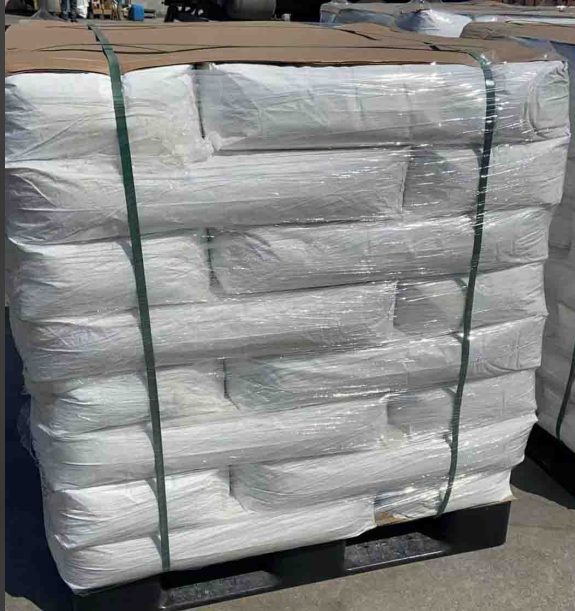
Organoclay bentonite Specification
Organoclay for Paints: Organic bentonite clay can be used in paints and coatings, both water-based and oil-based, Organic clay is a highly efficient organoclay rheological additive, modified from sodium-based bentonite clay powder. When added to paint formulations, pro – organoclays provide reproducible rheological properties, perfect thickening ability, high suspending properties, and good resistance to sedimentation.
Brand: Camp Shinning
Application: Solvent-Based Paints & Coatings
Water Based Paints & Coatings
Organic bentonite Specification
Organoclay rheological additive made from modified sodium bentonite powder. Adding organoclay to coating formulations can bring efficient rheological properties, excellent thickening ability, high thixotropy, good suspension and anti-pigment sag properties. Based on our experience in production and terminal applications, this page will provide detailed descriptions from three aspects: the system of organoclay (water-based & oil-based), polarity classification, and whether pre-gel or direct dry powder addition is required during application.
Solvent Based Organoclay
Water Based Organoclay
Organoclay for Paints
Organobentonite CP-34, CP-40, CP-180 are organo clay (modified bentonite), designed especially for use in solvent based system. Organoclay for Paints can be used widely in solvents from low polarity to medium-high polarity. We recommend that you do pre-gel treatment first, with high shear, to achieve ideal dispersion, and add 30%-40% polar activator at the same time, to achieve 100% activation effect. The usual addition amount is generally recommended to be between 0.2-3.
In addition to the models mentioned above, other models can be added directly as dry powder. These are easy dispersible bentonites.
In addition to being applied to paint coatings, they can also be applied to ink, grease and oil field drilling fluid etc.
CP series organic bentonite can be divided into three types:
Low polarity, medium polarity, and high polarity.
- organic bentonite CP-34 and CP-180 are low to medium high polarity;
- CP-10 is medium to high polarity;
- CP-APA, CP-MPZ, CP-250A, CP-EZ, etc., belong to the high polarity series organic bentonite.
CP-EW modified bentonite is a good anti sagging agent. It is mainly used in water-borne system.
Its application scope includes the following fields:
- Putty
- Cementing
- Antiseptic
- Industrial water reducible paint
- Toothpaste and tooth polish
- Cream and Lotions
- Emulsion paint
- Pigment and blunge water
- Water-borne sealant, adhesive
Organoclay for Paints (Water Based)
Organobentonite CP-WBS is water based inorgano clay rheological additive. It is mainly used in water based system.
Application
Organobentonite CP-EWB is used in the following applications:
- Industrial water reducible paint
- Toothpaste and tooth polish
- Cream and Lotions
- Emulsion paint
- Pigment and blung water
Organoclay for Paints


Organoclay for Paints
Organic bentonite Composition | Organic derivative of a montmorillonite clay |
Organic bentonite Appearance | Fine powder,white |
Organic bentonite Moisture content(105 Degree,2hr) | ≤3.5% |
Organic bentonite Loss on ignition (1000℃) | 28%-31% |
Organic bentonite Bulk density | 0.53g/cm3 |
Organic bentonite Fineness (<74μm, %) | ≥98% |
Organoclay for Paints
- High gelling effectiveness,
- Easy dispersing
- Prevents pigment setting
- Wide application range, it can be applied in all low, middle and high polarity range
- Produce reproducible thixotropic consistency over a wide temperature range
- Imparts particle suspension, preventing hard settling of pigment and fillers
- Exerts strong film reinforcing action in organic binder system
Organoclay for Paints
Organoclay Bentonite disperses under high shear and requires a polar activator for best efficiency. Heat is not required to obtain good dispersion. Addition levels are typically in 0.2%~2.0%. Polar activator (95% Ethanol or 95% Methanol) is needed.
Normally addition level of polar activator is recommended to be 40%~50% of organic Bentonite clay in weight. If in xylene system, addition level of polar activator is about 30%-40% of CP-34 in weight.
Pre-gel is made as below procedure.
- Charge solvent to mill
- Slowly add Bentonite 34(6-10% by weight of total pregel) to mill under agitation.
- Mix at high speed for 5 minutes.
- Add polar activator.
- Mix at high speed for 5 minutes.
Organoclay for Paints
Packing of Organoclay Bentonite:
The package: Kraft bag or kraft complex interior with PE or customized
Packing size: 25kg/bag,50lb/bag, 600kg/bag or customized.
15MT/20FCL with pallet, 18MT/20FCL without pallet, 25.2MT/40FCL with pallet.
The delivery date is 7 to 10 days after receiving the deposit.
Our Organic bentonite is used in:
- Marine paint | Organoclay for Paints,
- Industrial paint,
- heavy-duty,
- anticorrosion paint such as bituminous coatings, epoxy paints, chlorinated rubber paints
- Grease
- Inks
- Sealant
- Oil Drilling Mud



Company Profile
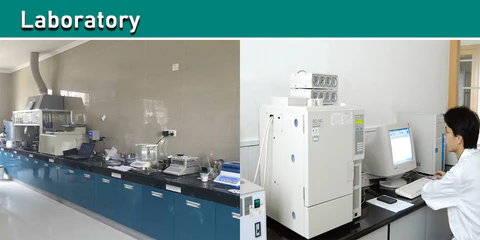
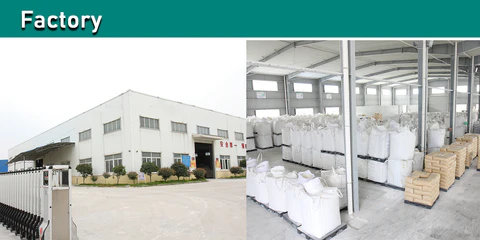
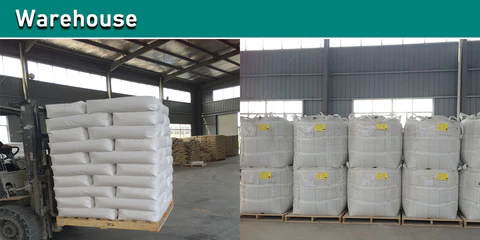
Zhejiang Camp-Shinning New Material Co., Ltd. is a professional manufacturer and supplier of organoclay for paints,bentonite rheology additives with advanced production lines and high-precision testing instruments. At present, Camp-Shinning has passed ISO9001 certification. Its annual output reaches 20,000 tons; it occupies a quarter of the global supply market.
After more than 20 years of accumulation, Camp Shinning’s products have been exported to Europe, America, the Middle East, Southeast Asia and other regions.
As a leading manufacturer and exporter of Organophilic Clay Rheology Auxiliaries, we are ready to welcome you to visit our factory and welcome inquiries.


Tel (Whatsapp): 0086-13185071071
Email: [email protected]
FAQ
1, How do you ensure product quality?
ISO9001 Certification: As an ISO9001-certified company, Camp-Shinning adheres to strict international standards throughout all operations.
Consistency Guarantee: Lab test samples provided to clients are sourced directly from mass production batches, ensuring product uniformity between samples and final shipments.
Pre-Shipment Verification: Customers may request pre-shipment samples for quality confirmation.
2,Why choose Camp-Shinning over competitors?
Zhejiang Camp-Shinning New Material Co., Ltd. offers unique advantages:
Vertical Integration: Ownership of raw material mines in Northern China guarantees stable performance and supply chain control for our organoclay products.
Two Decades of Expertise: 20+ years specializing in modified bentonite manufacturing and global distribution.
Rapid Turnaround: Industry-leading 7–10 day delivery timeline.
3,What are the applications of Modified Bentonite?
Common uses include:
Oil drilling fluids/mud,Organoclay for paints, coatings, inks, lubricating grease, and wastewater treatment.
4,Which markets do you serve?
We export to over 15 countries, including:
Europe: Germany, France, Austria, Spain
Americas: USA, Canada
Middle East/Asia: UAE, Pakistan, Russia, Turkey, India, Philippines, Thailand, Vietnam, Indonesia
5,What are your payment and shipping terms?
Shipping Options: FOB, CFR, CIF, EXW
Payment Methods: T/T (telegraphic transfer), L/C (letter of credit), D/P (documents against payment)
FAQ: Organo Clay (CP-34) for Solvent-Based Systems (Organoclay for Paints)
Q1: What is CP-34 organo clay, and what makes it unique?
A: rheological additive CP-34 is a modified bentonite clay engineered specifically for solvent-based systems. Its organic montmorillonite composition allows it to perform reliably across low- to medium-high-polarity solvents. Unlike traditional additives, organobentonite CP-34 delivers consistent thixotropic properties, prevents pigment settling, and reinforces film strength while maintaining a light-colored gel—ideal for applications where clarity and stability matter.
Q2: How does rheological additive CP-34 improve the performance of solvent-based paints and coatings?
A: CP-34 acts as a multifunctional additive. It provides high gelling efficiency to control viscosity, ensuring easy application without sagging. Its thixotropic behavior maintains consistency across varying temperatures, and its suspension properties prevent pigments and fillers from settling. This results in smoother finishes, longer shelf life, and reduced waste in products like marine, industrial, and Organoclay for Paints anticorrosion.
Q3: Can organophilic clay CP-34 be used in high-polarity solvents?
A: Yes! Organoclay for Paints CP-34 is formulated to work in a broad range of solvents, including medium-high-polarity systems. This versatility makes it suitable for diverse applications like alkyd paints(Organoclay for Paints ), polyester coatings, and even inks or greases. Always test compatibility with your specific solvent blend for optimal results.
Q4: Why is the “light color gel” property important?
A: A light-colored gel minimizes unwanted tinting in transparent or lightly pigmented formulations. This is critical for coatings or sealants where color accuracy matters, such as in wood finishes or clear protective layers.
Q5: How does Organoclay for Paints CP-34 prevent pigment settling in storage?
A: Organobentonite CP-34 creates a stable 3D network within the solvent system, suspending particles and resisting hard settling. This ensures your product stays homogeneous during storage, reducing the need for remixing and maintaining performance quality over time.
Q6: What industries benefit most from CP-34?
A: CP-34 is widely used in marine paints (resisting harsh environments) | Organoclay for Paints , anticorrosion coatings (like bituminous coatings), industrial sealants, printing inks, and grease formulations. It’s also effective in unsaturated polyester putty for automotive or construction repairs.
Q7: How do I incorporate CP-34 into my formulation?
A: For best results, pre-disperse CP-34 into your solvent under moderate shear. Typical usage ranges from 0.5% to 2.5% by weight, depending on the desired viscosity and thixotropy. Always consult the technical datasheet for guidance tailored to your system.
Q8: Is CP-34 environmentally compliant?
A: CP-34 meets standard industrial safety and environmental regulations for solvent-based products. However, always follow local guidelines for handling and disposal.
Q9: What does “bulk density 0.53g/cm³” mean for practical use?
A: The low bulk density ensures easy mixing and dispersion, reducing clumping and saving energy during production. Its fine powder form (<74μm) also promotes rapid integration into your solvent base.
Q10: Can CP-34 handle high-temperature applications?
A: While CP-34 performs reliably across a wide temperature range during storage and application, always verify its stability in extreme conditions (e.g., high-heat curing processes) through small-batch testing.
Q11: Can CP-34 be used alongside other additives like leveling agents or defoamers?
A: Absolutely! organophilic clay CP-34 is designed to work seamlessly with most common additives in solvent-based systems, including leveling agents, defoamers, and UV stabilizers. To maximize compatibility, we recommend dispersing CP-34 into the solvent base first to establish a stable gel network, then adding other additives gradually.
Always conduct a small-scale test to ensure no unintended interactions (e.g., viscosity shifts or reduced efficacy). This ensures your final formulation maintains performance and consistency.
Q12: Why is a polar activator required for CP-34, and how does it work?
A: Polar activators like 95% ethanol or methanol help “activate” CP-34 by facilitating the separation of clay platelets during dispersion. This process maximizes surface area and ensures optimal thixotropic gel formation. Without a polar activator, the clay may not fully disperse, leading to reduced efficiency in viscosity control and suspension properties.
Q13: Can I use a different polar activator besides ethanol or methanol?
A: The formulation is optimized for 95% ethanol or methanol due to their polarity and compatibility. While other polar solvents (e.g., acetone) might work, their effectiveness may vary.
We recommend sticking to the specified activators to ensure consistent results. Always test alternatives in small batches first.
Q14: Why does the polar activator dosage vary between xylene and other solvents?
A: Xylene has inherent polarity that partially activates CP-34, so less additional polar activator is needed (30%-40% vs. 40%-50% in other solvents). This adjustment prevents over-activation, which could destabilize the formulation or alter viscosity.
Q15: Can I skip the pre-gel preparation step and add CP-34 directly to my final product?
A: No. Pre-gel preparation ensures proper dispersion and activation of CP-34 before integrating it into your main formulation. Skipping this step risks uneven gel formation, clumping, or reduced performance. Follow the recommended pre-gel procedure for reliable results.
Q16: What happens if I add the polar activator before CP-34 during pre-gel preparation?
A: Adding the activator first can cause the clay to clump or form aggregates, making dispersion difficult. Always add Organoclay for Paints CP-34 to the solvent before introducing the polar activator to ensure smooth, even activation.
Q17: Is 5 minutes of high-speed mixing sufficient for both CP-34 and activator dispersion?
A: Yes—5 minutes of high shear after each addition (clay and activator) is typically enough to achieve a homogeneous pre-gel. Extending mixing time may introduce unnecessary air or heat. For larger batches, verify dispersion visually or with viscosity checks.
Q18: Can I reduce the CP-34 concentration in the pre-gel below 6%?
A: We recommend 6%-10% Organoclay for Paints CP-34 in the pre-gel to balance ease of dispersion and final performance. Lower concentrations may weaken the gel structure, while higher amounts could overtax your equipment. Adjust within this range based on your system’s needs.
Q19: What if I accidentally exceed the recommended polar activator dosage?
A: Excess activator might thin the gel or cause instability. If this occurs, gradually add more CP-34 to compensate, or dilute the mixture with additional solvent. Small-batch testing helps avoid this issue in production.
Q20: Does CP-34 work in low-shear mixing systems?
A: CP-34 requires high shear to fully disperse and activate. Low-shear methods (e.g., simple stirring) may leave the clay underutilized, resulting in weak thixotropy or settling. Ensure your equipment provides adequate shear force during pre-gel preparation.
Supplier of Organoclay for Paints in China.
We sincerely welcome you to consult our organophilic clay, whether it is applied to your paint, ink, grease or oil field drilling fluid.
Order Online
Please send your message to us
*We will reply your inquiry to this Email as soon as we see it