

What is organoclay used for
What is organoclay used for?Organic clay has a wide range of applications across various industries as a thickening rheological agent, anti-settling agent, anti-sagging agent, suspending agent, and thixotropic agent. Its extremely stable physical and chemical properties make it suitable for successful use in numerous fields.
What is organoclay used for

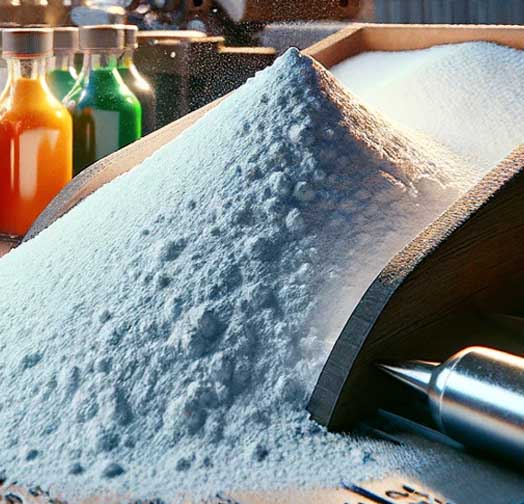
Organoclay Application
Organophilic Clay For Diesel Oil
Organophilic Clay For Mineral Oil
Organophilic Clay For Synthetic Oil
What is organoclay used for
What is organoclay used for?
Organiclay (typically referring to organic bentonite or organically modified clay)
- Coating Industry:
o As an anti-settling agent to prevent pigment and filler sedimentation.
o Adding organic clay to coatings and inks enhances coverage, water resistance, and weather resistance.
o Acts as a thickener and rheological additive to adjust the consistency and flow of coatings.
o Provides suspension stability to ensure even distribution of pigments and fillers.
- Ink Industry:
o Regulates ink consistency and viscosity, controlling flow and print performance.
o As a thixotropic agent, it imparts shear-thinning properties to improve ink transfer during printing.
- Drilling Mud:
o Functions as a thickener and rheological additive to improve the rheological properties of drilling mud.
o Acts as a suspending agent to ensure uniform dispersion of solid particles in drilling mud.
- Rubber and Plastics Industry:
o In plastics, organic clay serves as a modifier to enhance strength, modulus, and thermal stability.
o In rubber, it improves wear resistance and crack resistance.
- Cosmetics and Personal Care Products:
o Used as a thickener and suspending agent in various products like nail polish, lotions, and shampoos.
o Provides rheology and stability, ensuring product performance and stability.
- Environmental Applications:
o Removes harmful substances from water, such as organic solvents, oils, and dyes.
o Effective in adsorbing heavy metal ions and organic pollutants for environmental remediation.
- Other Applications:
o Used in the preparation of high-temperature greases, sealants, and more.
Organic clay’s extensive applications depend on its composition, structure, and treatment method. With advancements in materials science and nanotechnology, the range of applications for organic clay continues to expand.
What is organoclay used for?
Applications of Organiophilic clay in Drilling Mud
Organic bentonite has diverse applications in drilling mud, playing a crucial role due to its unique physical and chemical properties. It enhances the carrying capacity of drilling fluids, effectively transporting drill cuttings to maintain a clean wellbore. Here are specific applications:
- Rheology Adjustment:
o Organic bentonite improves the rheological properties of drilling fluids. By adjusting its consistency, the viscosity, shear force, and other rheological parameters of drilling fluids can be effectively controlled.
- Cleaning and Pressure Relief:
o Low-viscosity organic bentonite mud cleans the wellbore, removing coal rock debris and maintaining cleanliness.
- Wellbore Stability:
o High-quality mud created with organic bentonite can penetrate and bond with unstable sand and gravel around the wellbore, enhancing filtration control and inhibiting water infiltration. This helps maintain wellbore stability and prevents wellbore expansion.
- Filtration Reduction and Shear Force Enhancement:
o Adding organic bentonite to drilling fluids reduces filtration loss, minimizing wellbore erosion and stabilizing the wellbore to prevent collapse.
o It also significantly increases the viscosity and shear force of drilling mud, essential for maintaining mud stability and improving drilling efficiency.
- Cooling and Lubrication:
o During drilling, the bit cuts through rock and debris, generating heat. Organic bentonite provides cooling and lubrication, protecting the drill bit and extending its lifespan. This prevents equipment damage and reduces losses while lubricating drilling tools to decrease friction and improve efficiency.
- Gelling Ability:
o Organic bentonite can react with other drilling fluid components to form gel-like substances, enhancing the viscosity and filtration control of drilling fluids. This stability is maintained even under high-temperature and high-pressure conditions.
In conclusion, organic bentonite’s applications in drilling mud include rheology adjustment, wellbore cleaning, enhanced gelling rate, wellbore stability maintenance, cooling and lubrication, and gelling ability. These applications improve drilling efficiency and reduce costs, making organic bentonite a highly effective and economical chemical additive.
What is organoclay used for?
Organo clay (modified bentonite), designed especially for use in solvent based system. It can be used widely in solvents from low polarity to medium-high polarity.
Properties
Composition Organic derivative of a montmorillonite clay
Appearance Fine powder, light yellow
Moisture content (105℃,2hr) ≤3.5%
Loss on ignition (1000℃) 28%-30%
Bulk density 0.53g/cm3
Fineness (<74μm, %) ≥98%
Advantages
- High gelling efficiency
- Light color gel
- Produce reproducible thixotropic consistency over a wide temperature range
- Imparts particle suspension, preventing hard settling of pigment and fillers.
- Exerts strong film reinforcing action in organic binder systems.
Application | What is organoclay used for?
Organoclay Bentonite is used in the following applications:
- Marine paint, Industrial paint, heavy-duty, anticorrosion paint such as bituminous coatings, polyester paints, Alkyd paints.
- Sealant
- Inks
- Grease
- Unsaturated polyester putty
Using
CP-34 disperses under high shear and requires a polar activator for best efficiency. Heat is not required to obtain good dispersion. Addition levels are typically in 0.2%~2.0%. Polar activator (95% Ethanol or 95% Methanol) is needed. Normally addition level of polar activator is recommended to be 40%~50% of CP-34 in weight. If in xylene system, addition level of polar activator is about 30%-40% of CP-34 in weight.
Pre-gel is made as below procedure.
- Charge solvent to mill
- Slowly add CP-34(6-10% by weight of total pregel) to mill under agitation.
- Mix at high speed for 5 minutes.
- Add polar activator.
- Mix at high speed for 5 minutes.
Safety
All safety information is provided in the Material Safety Data Sheets for Zhejiang Camp-Shinning New Material Co.,Ltd..
Order Online
Please send your message to us
*We will reply your inquiry to this Email as soon as we see it