Organoclay Rheological Additive CP-40

Rheological Additive

Organoclay Rheological Additive

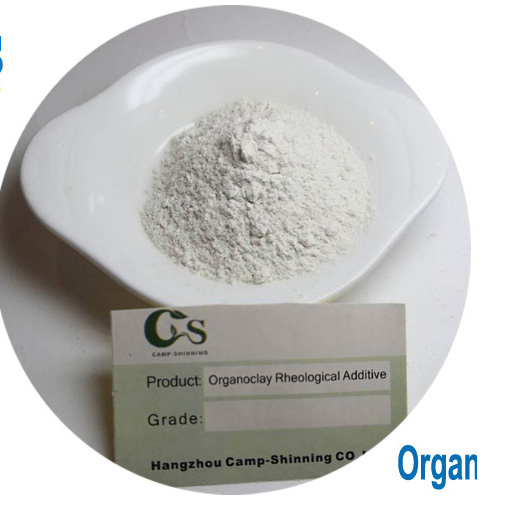
Organoclay Rheological Additive CP-40 is an organo clay (modified bentonite), designed especially for use in solvent based system. Rheological agent can be used widely in solvents from low polarity to medium-high polarity.

Rheological agent 

Properties:
Composition                                 Organic derivative of a montmorillonite clay
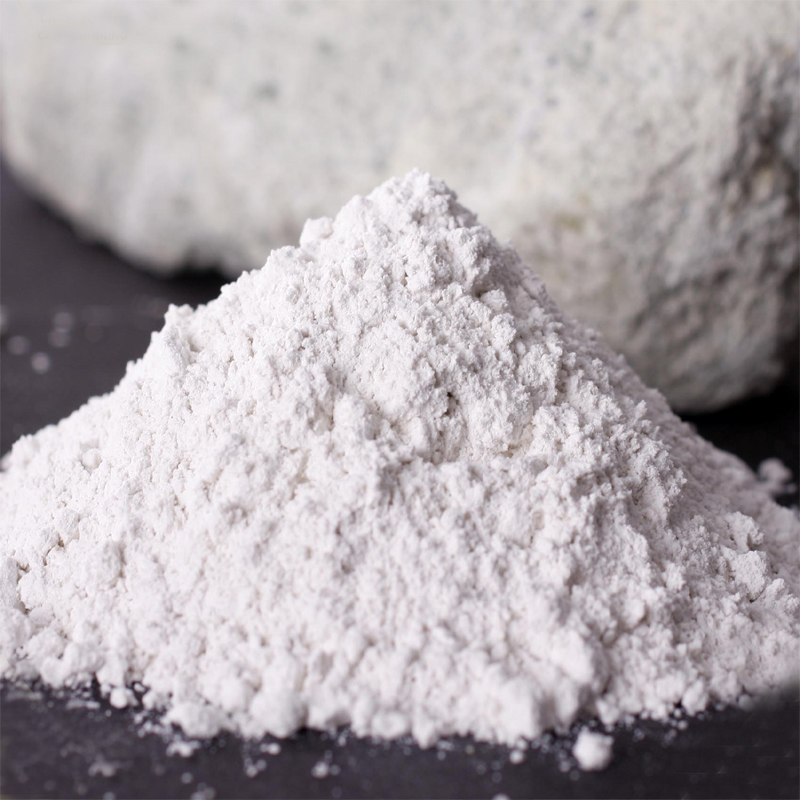
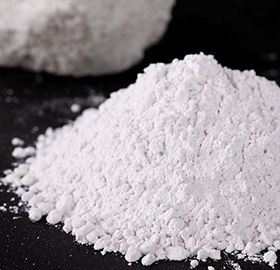
Appearance                                   Fine powder,  light yellow
Moisture content (105℃,2hr)       ≤3.5%
Loss on ignition (1000℃)             28%-31%
Bulk density                                 0.53g/cm3
Fineness (<74μm, %)                  ≥98%

Advantages:
High gelling efficiency,high viscosity
Wide application range, it can be applied in all low, middle and high polarity range
Produce reproducible thixotropic consistency over a wide temperature range
Imparts particle suspension, preventing hard settling of pigment and fillers
Exerts strong film reinforcing action in organic binder systems

Application:
Rheological agent CP-40 is used in the following applications:
Marine paint, Industrial paint, heavy-duty, anticorrosion paint such as
bituminous coatings, epoxy paints, chlorinated rubber paints
Grease
Inks
Sealant

Oil Drilling Mud

Using:
Organoclay CP-40 disperses under high shear and requires a polar activator for best efficiency. Heat is not required to obtain good dispersion. Addition levels are typically in 0.2%~2.0%. Polar activator (95% Ethanol or 95% Methanol) is needed. Normally addition level of polar activator is recommended to be 45%~60% of CP-40 in weight. If in xylene system, addition level of polar activator is about 30%-40% of CP-40 in weight.
Pre-gel is made as below procedure.
1. Charge solvent to mill
2. Slowly add Rheological Additive CP-40 (6-10% by weight of total pre-gel) to mill under agitation.
3. Mix at high speed for 5 minutes.
4. Add polar activator.
5. Mix at high speed for 5 minutes.

Safety:
All safety information is provided in the Material Safety Data Sheets for Zhejiang Camp-Shinning New Material Co.,Ltd.

Package:
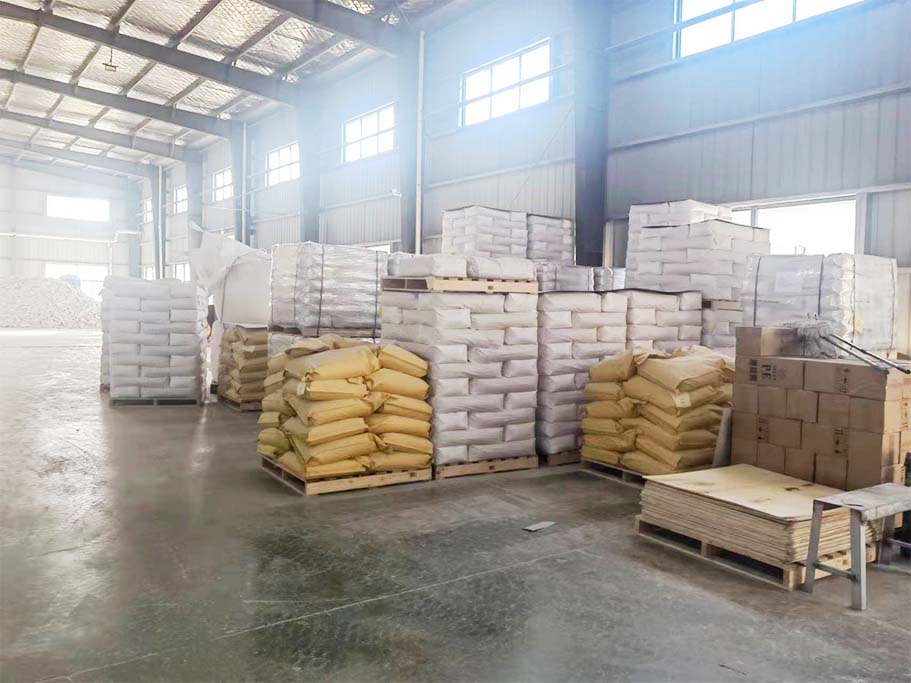
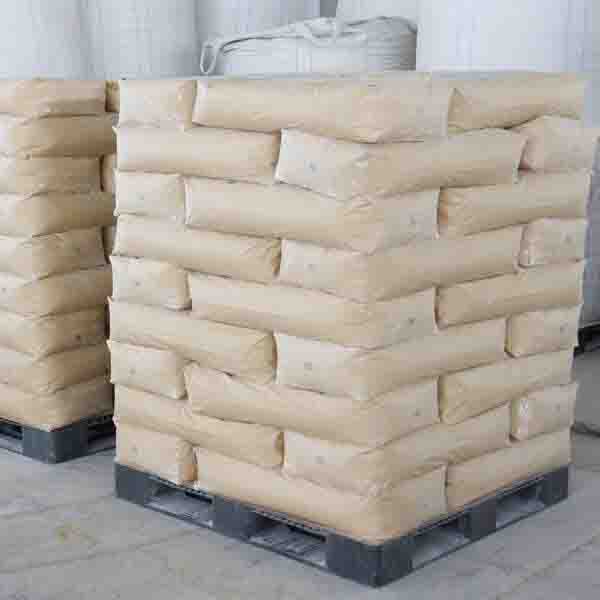
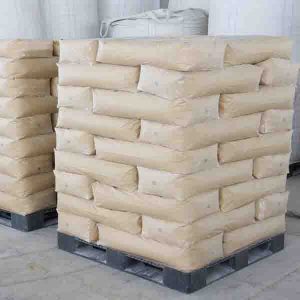
Kraft bag or kraft complex interior with PE or customized

Storage:
Rheological agent CP-40 has a shelf life of 2 years, and should be stored in ventilated cool and dry place.

Notice:
The information on use is based on data which are believed reliable, but any recommendation or suggestion made is without guarantee or warranty, since the conditions of use are outside our control. All products are sold on the conditions that purchasers shall make their own tests to determine the suitability of such products for their purpose and that all risks are assumed by user. We disclaim any responsibility for damages resulting from careless or improper handling or use. Nothing herein is to be taken as permission, inducement or recommendation to practice any patented invention without a license.

Rheological Additive

Organoclay rheological additives are organic bentonite clays with a variety of properties. They are used in water based coatings, cosmetics, inks, and grease products, in addition to paint formulations. They are, however, most commonly used in the field of oil drilling fluid.

Organoclay rheological additives is a versatile material with numerous applications. It can be used as an oil adsorbent and viscosifier in oil-based drilling fluids due to its large surface area. It can also be used to filter wastewater. An organoclay complex is a solid powder that is free-flowing and insoluble in organic solvents and liquids.

The rheological properties of organoclay-based rheological additives can significantly improve a solution’s sag, viscosity, and sag resistance. Furthermore, a mixture of inorganic and organic pigments can be created to improve the aesthetic effects of a composition. This is not only a great way to improve the aesthetics of a product, but it can also help to improve the weather resistance and defect coverage of a material.

Many products require the use of organoclay rheological additives. It is used as an adsorbent for oil and a viscosifier for oil-based drilling fluids due to its large surface area. It is also capable of filtering wastewater. An organoclay rheological additive is a common ingredient in sandblasting systems and is used to make paints and coatings.

An organoclay rheological additive is a substance that is used to give paints and other materials properties. Mineral drilling, grease removal, ink, paint, and filtration media are just a few of the applications for this compound. To put it another way, it can be used in paints and coatings, sandblasting systems, and inks. Organoclay combines a number of advantages due to its high surface area and inherent rheological property.

Organoclays are a versatile material with a large surface area. As a result, they can be used in a variety of applications, ranging from oil-based drilling fluids to wastewater filters. They are easily dispersed as a powder and are soluble in water and organic solvents. They are also insoluble in liquids and can be mixed in with paints. Organoclay is an excellent rheological additive for a wide range of products, in addition to its versatility.

Organoclay is a one-of-a-kind substance with a plethora of applications. Its versatility is demonstrated by its capacity to dissolve hydrocarbons in water, which is a form of organic matter.

The substance contains amines that were added during the manufacturing process to the clay. These amines aid in the mixing of clay with previously incompatible substances. For example, while oil will not dissolve in water, it will dissolve in organoclay.

Chemical modifications have been made to this clay to increase its efficacy in wastewater treatment. It is primarily made up of bentonite, a volcanic ash containing the mineral montmorillonite.

Organoclay contains quaternary amines, which are chemical compounds that give it useful industrial properties. It is capable of dissolving oil and grease in water, for instance.

Organoclay is a substance that is used in the treatment of groundwater. It attracts hydrocarbons and allows for the reintroduction of clean water to the environment.

Organoclay may be used in conjunction with carbon filters in some instances during the treatment process. Organoclay is also used for a variety of other purposes, including water treatment. Because contaminated groundwater poses a risk to human health, it is critical to treat it before it reaches the surface.

Organoclay is a sodium phyllosilicate that has been organically modified. This material is synthesized via the exchange of interlayer cations for organocations.

As a result, an organic moiety is covalently linked to another organic moiety. It is used to absorb oil and other fluids due to its large surface area. Additionally, it serves as a viscosifier in drilling fluids containing oil. Organoclay is a cutting-edge material with an eco-friendly manufacturing process.


Oil and other organic contaminants are removed using organoclay in wastewater. Organoclay is primarily used in filter presses, bag filters, and solvent-based paints.

Personal care products and drilling fluids are additional applications. Organoclay is a valuable part of any cleaning process due to its high filtration efficiency.

The cosmetics and personal care industries are the most common applications for organoclay. Additionally, it is used to thicken systems containing solvents.

Its high opacity enables pigments to be suspended and emulsions to be stabilized. It is widely used in the personal care and cosmetics markets due to its versatility.

Due to its rheological properties, it is an excellent rheological additive in transparent systems.


Email: [email protected]           Wechat/Whatsapp: +86-13185071071

Tag:  Organoclay rheological additive , Organoclay , organophilic clay , Organoclay supplier

Organoclay manufacturer supply rheological additive CP-EL

Rheology viscosifier

Organoclay manufacturer supply rheological additive CP-EL

Organo clay manufacturer supply rheological additive CP-EL is an organo clay (modified montmorillonite), designed especially for use in solvent based system including intermediate and low polarity range organic liquid.

Properties

Composition                      Organic derivative of a montmorillonite clay

Appearance                       Fine powder, white

Moisture content (105℃,2hr)         ≤3.5%

Loss on ignition (1000℃)            28%-32%

Bulk density                       0.53g/cm3

Fineness (<74μm, %)               ≥98%

Advantages of Organophilic clay

  • Exerts gelling efficiency over a wide range of intermediate and low polarity
  • Easy dispersing
  • The gel is colourless and of high clarity
  • Produce reproducible thixotropic consistency over a wide temperature range
  • Imparts particle suspension, sag resistance without impairing flow and leveling, preventing hard settling of pigment and fillers
  • Exerts strong film reinforcing action in organic binder system

Application

Organobentonite CP-EL is used in the following applications:

  • Paints & coatings with solvent of low to medium polarity
  • Lubricant Grease, ink, sealant
  • Cosmetic
  • Refractory

Using

Organo clays CP-EL disperses under high shear and requires a polar activator (30%~40%)  for best efficiency. Heat is not required to obtain good dispersion. Addition levels are typically in 0.2%~2.0%. Polar activator (95% Ethanol or 95% Methanol) is needed. Normally addition level of polar activator is recommended to be 30%~40% of CP-EL in weight.

Safety

All safety information is provided in the Material Safety Data Sheets for Zhejiang Camp-Shinning New Material Co.,Ltd..

Package

Kraft paper bag with PE liner or multi-wall paper sacks or customized. 25kg/bag or 22.68kg/bag or customized

Storage

Rheology modifier CP-EL has a shelf life of 2 years, and should be stored in ventilated cool and dry place.

Notice

The information on use is based on data which are believed reliable, but any recommendation or suggestion made are without guarantee or warranty, since the conditions of use are outside our control.

All products are sold on the conditions that purchasers shall make their own tests to determine the suitability of such products for their purpose and that all risks are assumed by user. We disclaim any responsibility for damages resulting from careless or improper handling or use.

Nothing herein is to be taken as permission, inducement or recommendation to practice any patented invention without a license.

Amine treated lignite Organophilic lignite | For oil drilling

Amine treated lignite

Amine treated lignite Organophilic lignite | For oil drilling

 
Organophilic lignite is an amine treated lignite which mainly be used for oil drilling mud.  organophilic lignite as a filtration control additive, it   use in synthetic oil base systems and all oil base systems.
 
Organophilic lignite is very good as HTHP filtrate control.
 
The biggest feature of our organic Hemei is that it has very low ash content, has an extremely wide range of applications, and has relatively good processability.
 
Its quality is 2 to 4 times higher than traditional products.
 
Of course, this is also closely related to the conditions of your application.
 
Our factory also produce organophilic clay , organophilic lignite and Emulsifier | Primary  Emulsifier , Secondary Emulsifier .
 
Specification | Amine treated lignite Organophilic lignite | For oil drilling
 
Items
 

Specification  | Amine treated lignite

 
Appearance       Black Powder
 
Oil Soluble, %       ≥85≥90
Usage & Dosage | Amine treated lignite Organophilic lignite | For oil drilling
 
1. Organic Lignite is used for filtration control mainly in oil based drilling fluids, and is compatible with other oil drilling additives.
 
2. Suggested dosage is about 3.0-5.0%.
 

Package | Amine treated lignite

1.Filtration Control Agent Organic Lignite is usually kept in a compound or multi-wall bags, with each net weight 25kg,22.7(50lb), 14MT/20FCL with pallet.
2. Special packages are available based on customers’ requirements.
3. Every 20-feet container can hold 12-14tons.
 
Storage
 
1. Organophilic Lignite should be kept in shady, dry and ventilated warehouse where environment temperature is controlled below 60 centdegree and relative humidity is under 50%.
 
2.Organophilic Lignite should be prevented from sun and rain, and positioned in some place away from heat and fire; the recommendation for bag piles is no more than 8 layers.
 
3. The expiration period is 12 months.
 
Advantages of organic lignite:
 
It stabilizes the rheological properties of drilling fluids. Even under conditions of relatively high viscosity and hardness, it can always maintain its relatively high performance.
 
The pulping rate and mud cake quality are effectively controlled. A relatively good stability can be achieved in the entire control of drilling mud. This is an excellent anti-flocculating agent. It is also a good environmentally friendly reagent.

Safety

1. Avoid contacting with eyes, skin and clothing. Otherwise, wash with a flush of water.

2. Refer to Material Safety Data Sheet (MSDS) for complete handling and hazard data.

The entire process of mining organic lignite is to stack it, then dry, grind, and package it, and finally used in drilling fluids. Modified Organic lignite will oxidize in the air. Organic lignite can effectively control water loss.

When you use organic lignite directly into the mud, you still need caustic soda to dissolve it better, so we recommend that you pre-alkalize the lignite.

We sincerely hope that you will consult us and ask us for samples and product manuals when you have the opportunity. Our samples are free, and we are also equipped with a complete technical team to support the development of your project.

In terms of application fields, usage and testing steps, and your specific requirements, we can adjust the formula of our products based on these details to ultimately achieve the success of your project.

If you are interesting our Organic Lignite or organophilic clay , organophilic lignite and Emulsifier | Primary  Emulsifier , Secondary Emulsifier . pls contact us by mail:

[email protected]

Cel(whatsapp): 86-13185071071

Looking forward to you contacting us.Thank you

Rheology viscosifier CP-180 for mineral oil

Rheology viscosifier

Rheology viscosifier CP-992S for mineral oil

Rheology viscosifier is a modified bentonite,another named organophilic clay for mineral oil.  As organically modified bentonite clay, it is disperses easily in less time with less shear. With high performance viscosifier for low aromatic, all mineral oil and synthetic base fluids. Cost- effectively builds viscosity and yield point, Aids control of fluid loss to the formation ,Increases emulsion stability, Suspends weighting  materials and other solids,Confers stability at the pressure and temperature 108Pa and 230℃ .

The viscosifying drilling Fluids include : oil based drilling fluids , Invert emulsion fluids , Workover fluidsl , Completion fluids , Casing packs , Packer fluids and Spotting fluids .

Rheology viscosifier

Package and storage:

The package:  Kraft bag or kraft complex interior with PE or customized

Packing size: 25kg/bag or 500kg/bag or customized. Products should be stored in ventilated cool and dry place.

Storage life:  Two years

Rheology viscosifier

We are now looking for Global Distributors for our organoclay, Welcome to cooperate with us !

 E-MAIL:   [email protected]

(TEL / Wechat)  0086-13185071071

Zhejiang Camp-Shinning New Material Co.Ltd

⇒ You are welcome to send us an email to know the latest information about organophilic clay.We would like to send you the latest catalogue, or free rheological additive samples for testing.

#Organoclay #RheologicalAdditive #ModifiedBentonite